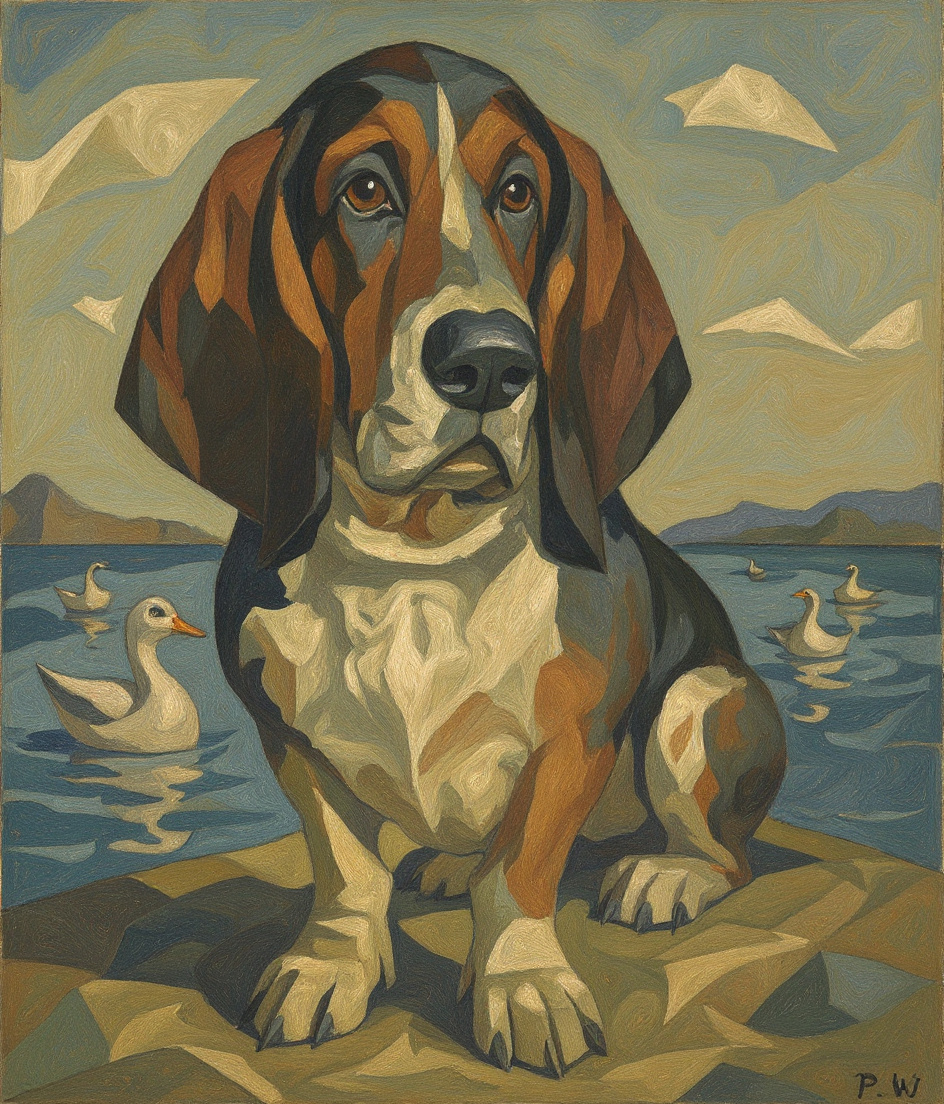
The river at eight o'clock is not the river at noon.
This occurred to me tonight as we walked the path along the Deschutes, the air still holding some of winter's edge despite the calendar's insistence that spring had arrived three hours earlier. The water moved with a different urgency — not the lazy afternoon drift I know from our usual visits, but something more purposeful, more private.
Daylight river is all performance. Kayakers paddle by with their bright helmets and serious expressions. Children throw sticks while their parents check phones. Dogs — other dogs, less distinguished dogs — splash and retrieve and generally make a spectacle of themselves. The whole thing has the quality of a stage production, everyone playing their assigned roles in the outdoor recreation theater.
But evening river keeps its own counsel.
The light changes everything, of course. What was blue becomes black-green. What was clear becomes mysterious. The surface catches fragments of the streetlamps and holds them briefly before letting them slip away downstream. Even my humans walk differently here — slower, quieter, as if they sense they've entered something's private hours.
I find myself less inclined to investigate every scent trail, less concerned with marking my territory against the various indignities left by previous visitors. The usual basset priorities — thorough cataloging of who passed this way and when — seem somehow beside the point. Instead, I walk and listen.
The river talks more at night. During the day its voice gets lost under all the human chatter, the bicycle tires on pavement, the distant traffic from the bridges. But now, with the recreational crowd departed and the serious business of evening begun, I can hear what it's been trying to say all along. Something about persistence. Something about the long view.
Gus, predictably, remains unmoved by these philosophical considerations. He walks his steady pace, pauses at his preferred spots, conducts his evening business with the same methodical attention he brings to everything. This is not criticism — merely observation. Some of us are moved by the poetry of flowing water under starlight. Others are moved by more practical concerns. Both approaches have their merits.
The path curves away from the river eventually, as all paths must, and we make our way home through the quiet streets of our neighborhood. But something of the evening river comes with us — that sense of things moving in their proper time, of currents that run deeper than the surface suggests.
By the time we reach our front door, the day has fully surrendered to night. Inside, the usual routines await: the final cookie distribution, the settling into beds, the gradual surrender to sleep. But first, a moment on the front porch to let the evening air carry away whatever small urgencies the day accumulated.
The river keeps moving. This, I find, is a comfort.
~P.W.